Healthy snacking habits are simple routines that help manage hunger, maintain energy, and reduce reliance on ultra-processed foods. The easiest habits to build include choosing fibre-rich snacks, controlling portions, reducing refined sugar, and keeping nutritious options readily available.
Here’s a quick look at what that actually involves:
- Snack only when genuinely hungry, not out of boredom or habit
- Choose minimally processed snacks with whole-food ingredients
- Prioritise fibre-rich snacks to stay fuller for longer
The rest of this guide breaks each of these down, along with practical snack ideas.
1. Don't Skip Snacks - Choose Nutritious Snacks Wisely
Skipping snacks altogether often backfires. When you ignore genuine hunger, you’re more likely to overeat at your next meal or reach for whatever’s closest, usually something ultra-processed and low in nutrition.
Instead of avoiding snacks, learn to recognize real hunger versus boredom, and build smart snacking habits:
- Eat when you’re genuinely hungry, not just because a snack is in front of you.
- Avoid ultra-processed snacks loaded with refined flour, preservatives, and artificial flavours.
- Look for whole-food ingredients you can actually recognize on the label grains, seeds, nuts, and natural sweeteners.
The goal isn’t restriction; it’s replacement. Swap empty-calorie packaged snacks for minimally processed snacks that genuinely support your day.
2. Choose Healthy Snack Ideas Made with Natural Ingredients
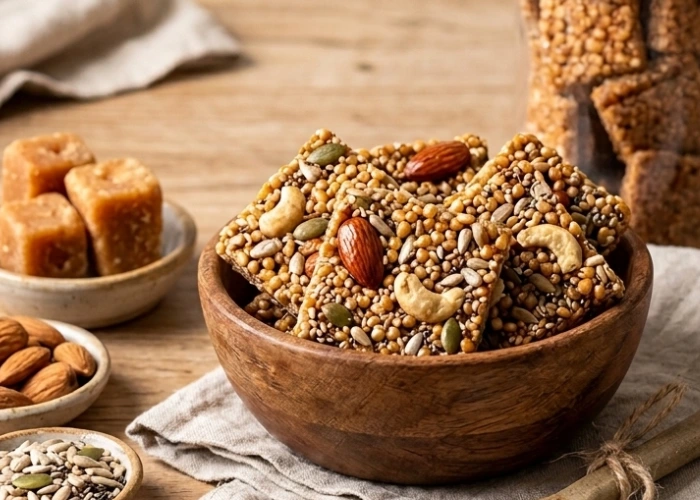
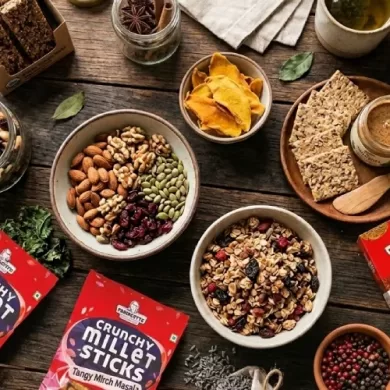
Not all snacks are created equal. A snack made with millets, jaggery, nuts, and seeds is a very different choice from one made with refined flour and white sugar.
- Millets are traditional grains that have been part of Indian diets for centuries and are naturally rich in fibre making millet snacks a smart everyday choice.
- Jaggery is an unrefined sweetener often considered a better alternative to refined white sugar, so snacks with jaggery are worth choosing over sugary alternatives.
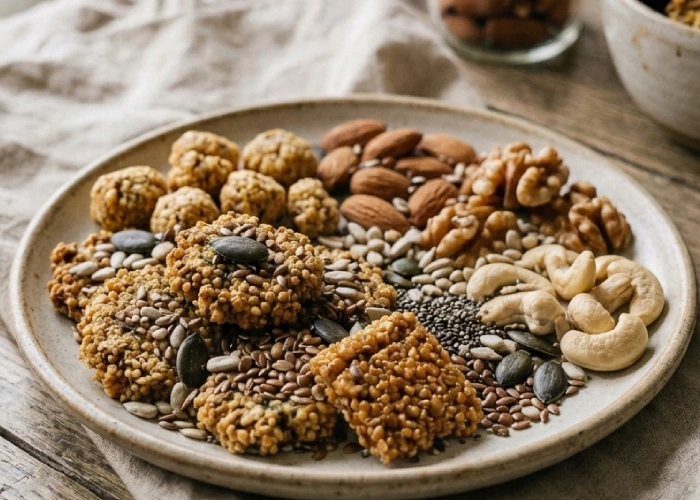
- Nuts and seeds add natural crunch, healthy fats, and texture without needing artificial additives.
When you check the ingredient list of a snack, simplicity is usually a good sign. The fewer processed additives, the more nutritious the snack tends to be.
3. How Portion Control Improves Healthy Snacking Habits
Even nutritious snacks can add up if you’re not mindful about quantity. A few simple habits go a long way:
- Eat small portions rather than large servings at once.
- Avoid eating directly from large packs and portion out what you need into a small bowl or container instead.
- Pair your snack with water or herbal tea, which can help you feel satisfied without overeating.
Portion control isn’t about counting every calorie; it’s about being intentional so snacking stays a helpful habit rather than an unconscious one.

4. Include Fibre in Every Snack
Fibre plays a quiet but important role in how satisfied you feel after eating. Here’s why fibre-rich snacks matter:
- It keeps you full longer, reducing the urge to snack again soon after.
- It supports digestion and overall gut health.
- It reduces unnecessary cravings that often come from quick sugar spikes and crashes.
The ICMR-NIN Dietary Guidelines for Indians recommend including more fibre-rich foods such as whole grains, millets, pulses, and vegetables, and cutting back on ultra-processed foods which is part of why millets are a practical addition to a nutritious snacking routine.
5. How to Reduce Refined Sugar When Snacking
Refined sugar gives a quick burst of energy followed by an equally quick crash. This cycle of spikes and dips can leave you reaching for another snack sooner than you’d like.
A simple habit shift is choosing snacks with jaggery or other less-refined alternatives instead of refined sugar. Jaggery is less refined than white sugar, but it is still a form of added sugar and should be consumed in moderation. The WHO guideline on sugars intake recommends keeping free sugars including natural sweeteners like jaggery and honey under 10% of total daily energy intake.
6. What This Looks Like in Practice: A Millet-Based Snack
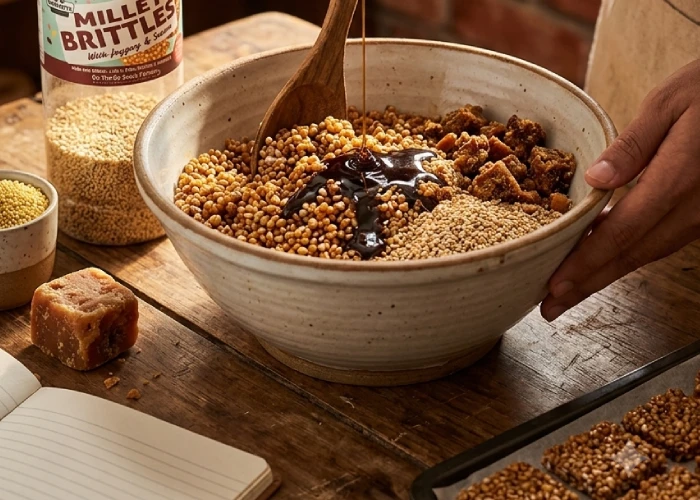
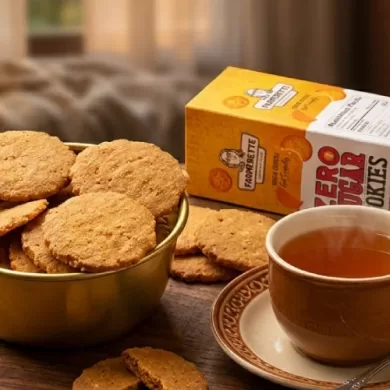
One example of a snack that reflects these habits is the Farmerette Millet Brittles Jar, made with puffed little millet, kodo millet, sesame seeds, and jaggery, without palm oil or added fat whole grains and seeds in place of refined sugar. As with any packaged snack, portion size and frequency still matter; it works best as an occasional swap rather than an everyday default.
A Simple Healthy Snacking Routine
Putting these habits into a day-to-day plan can look something like this:
- Mid-morning: a small portion of a roasted millet snack or nuts
- Evening: a millet brittle or similar fibre-rich snack with tea
- Travel: a portion-packed snack you can carry without needing refrigeration
The exact snacks will vary by preference; the structure (a planned, portioned snack at predictable points in the day) is what matters most.

FAQs
What are examples of healthy snacking habits? Eating only when genuinely hungry, choosing whole-food ingredients, watching portion sizes, and snacking mindfully instead of while distracted are all simple healthy snacking habits.
Are millet snacks a good option for daily snacking? Millets are naturally a good source of fibre and are often used in wholesome snacks as an alternative to refined-flour options, making millet snacks a practical everyday choice.
Is jaggery a healthier alternative to refined sugar in snacks? Jaggery is less refined than white sugar, but it is still a form of added sugar. Snacks with jaggery can be a reasonable swap for refined-sugar snacks, but they should still be consumed in moderation.
Conclusion
If there’s one takeaway here, it’s this: you don’t need to overhaul your diet to snack better you need one or two habits you can actually keep. Pick a starting point, whether that’s portioning snacks in advance, cutting back on refined sugar, or keeping a fibre-rich option at your desk, and build from there rather than trying to change everything at once.
Looking for a crunchy snack that’s made with wholesome ingredients? Explore the Farmerette Millet Brittles Jar and make healthier snacking a part of your daily routine.


Add comment